Published on 28 July 2026

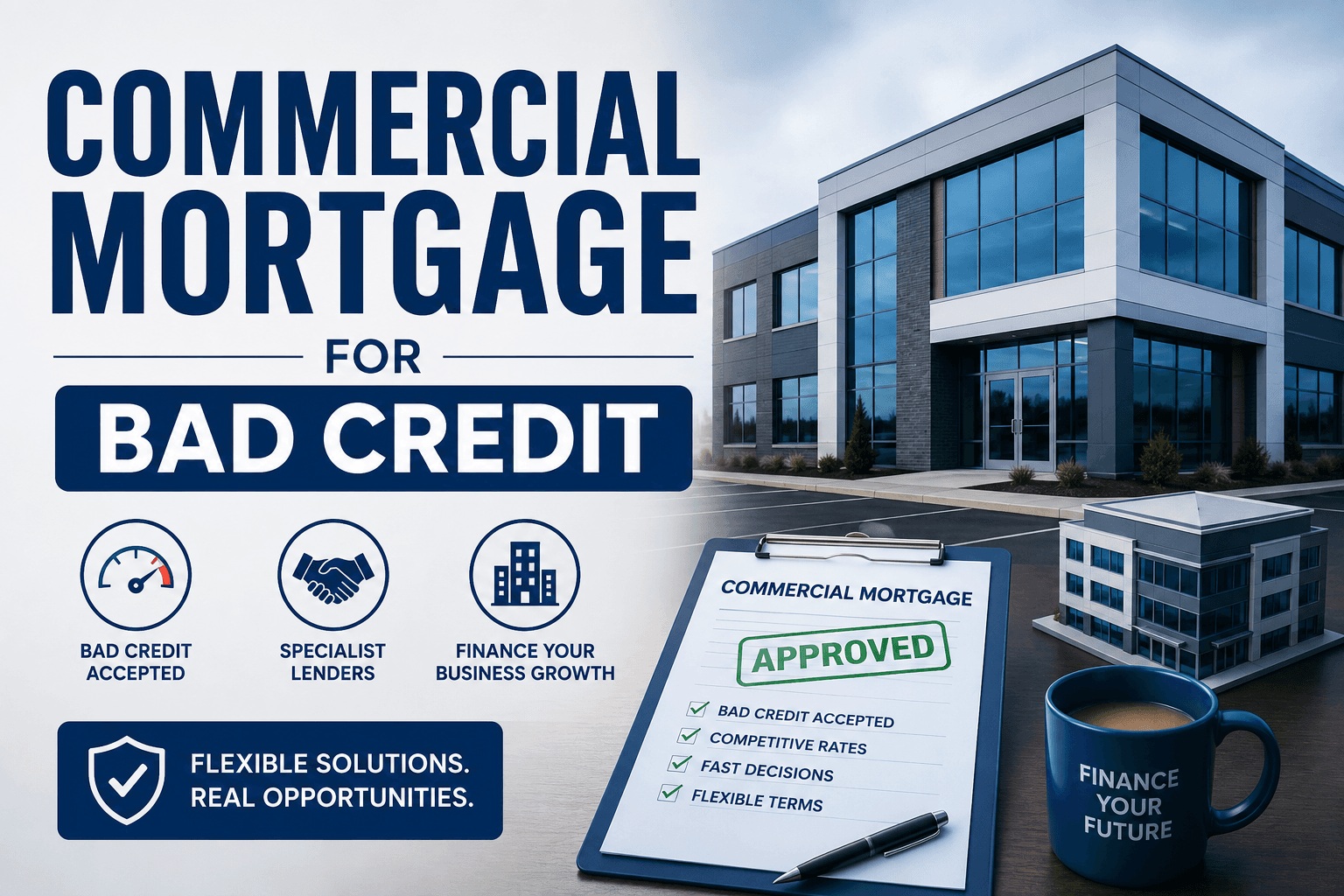
Securing a commercial mortgage with bad credit is challenging but possible. If you've been turned down by your bank, you're not out of options. This guide explains exactly how UK businesses with adverse credit histories can still get approved, what it costs, and how to prepare.
Fast answer: Can I get a commercial mortgage with bad credit?
Yes. UK borrowers can get a commercial mortgage even with county court judgments, defaults, individual voluntary agreements (IVAs), and even previous bankruptcy on their record. Your choice of lender will narrow and pricing will be higher, but approval is achievable.
Specialist commercial mortgage lenders and brokers routinely handle adverse credit cases. Unlike high street banks that rely on rigid scoring, specialist lenders assess applications on a case by case basis, weighing the context behind your credit problems against the current strength of your business. Many lenders look beyond credit scores and assess the overall strength of the business before making a decision.
Enable Finance works specifically with UK SMEs and their brokers to secure funding when a business, its directors, or shareholders have historic credit issues. As a platform combining AI-powered lender matching with expert human brokerage, Enable Finance connects borrowers to lenders who will actually consider their credit profile in the same way a specialist business loan broker would.
A practical example: a retailer in Manchester with two satisfied CCJs from 2021 and 2022 secured a £350,000 owner-occupied commercial mortgage in 2025 at 70% LTV via a specialist lender.
Here is what the rest of this article covers:
- What counts as bad credit and which types lenders accept
- Typical LTVs, deposits and interest rates for adverse credit cases
- How lenders assess risk and calculate affordability
- When alternative finance like bridging loans or invoice finance may be a better first step
- How to prepare and apply to maximise your approval chances
What counts as "bad credit" for a commercial mortgage in the UK?
Bad credit, often called adverse credit in lending circles, covers a wide spectrum. It ranges from a single missed payment on a credit card to a full bankruptcy, and lenders examine both your personal credit history and your business credit record when assessing a commercial mortgage application, so borrowers with a bad credit history are reviewed across both.
The most common types of adverse items include missed payments on loans, credit cards, overdrafts or utilities; defaults registered on personal or business accounts; county court judgments and High Court judgments; Debt Management Plans and individual voluntary arrangements; company voluntary arrangements and pre-pack administrations; and previous bankruptcy, sequestration, or repossession of property. Missed payments can escalate into registered defaults or CCJs if left unresolved, so even minor slips matter.
Lenders typically review the last six years of credit history, which aligns with how long data stays on UK credit files. However, more serious events like bankruptcy or company liquidation may be questioned even beyond that window.
The distinction between satisfied and unsatisfied matters enormously. A fully satisfied CCJ or default shows the debt was repaid, while unsatisfied items suggest unresolved obligations. Similarly, discharged bankruptcy or a completed IVA is treated far more favourably than an undischarged one. Satisfied defaults are viewed more favorably than unsatisfied ones because they demonstrate the borrower took responsibility.
High utilisation of credit limits - say 90% or more on business credit cards or overdrafts - can also flag risk, even without any missed payments. For a limited company application, lenders routinely check directors' and major shareholders' personal credit files alongside the company's records at Experian, Equifax, and TransUnion.
How commercial mortgage lenders assess applications with bad credit
Most commercial mortgages are not regulated by the FCA in the same way a residential mortgage would be, which gives lenders more flexibility. They underwrite on a "story plus numbers" basis rather than applying a blanket score threshold. This means the reasons behind your poor credit history genuinely matter.
The main risk factors lenders consider include the age of the adverse credit (a default in 2019 carries far less weight than one in 2025), the severity (a small £250 phone default versus a £30,000 CCJ or bankruptcy), the frequency (a one-off slip versus repeated missed payments), whether the debt has been repaid or written off, and whether anyone - including HMRC - was left out of pocket through a liquidation or CVA. Recent or severe credit issues are harder to overcome than older or minor issues.

Lenders also differentiate between owner-occupied commercial mortgages, where repayments are serviced from trading profits, and commercial investment mortgages, where rental income covers the loan. For investment property, lenders require rent to cover 145–160% of the stressed mortgage payment. A high Debt Service Coverage Ratio indicates strong affordability and is favored by lenders in both scenarios.
Lenders may focus on recent business accounts or bank statements rather than credit history alone. A hospitality business that went through a CVA in 2021 but rebuilt profitability by 2023–24 could secure a refinance in 2024 through a specialist lender, provided its trading performance now justifies the loan.
Enable Finance's role is to package the case: providing context around why credit problems arose (such as COVID-19 trading restrictions) and presenting up-to-date management accounts that show the business has recovered. Explaining past credit issues can help lenders understand the context of adverse credit and reduce the perceived risk. Applications for bad credit commercial mortgages may take longer due to manual underwriting, but thorough preparation speeds the process up.
What types of adverse credit can still be accepted?
Almost every type of adverse credit can be considered somewhere in the UK commercial mortgage market. Some lenders specialise in bad credit commercial mortgages, and terms will vary depending on the nature and recency of the issue.
Sporadic missed payments that are historic and now fully up to date are often acceptable to many lenders, particularly if the borrower can demonstrate stable conduct over the past 12–24 months. Single, small defaults older than 24 months may be overlooked entirely by some specialist lenders, though multiple or recent defaults will usually push you toward lower LTVs and specialist products. Lenders may overlook defaults older than two years when the overall financial situation is otherwise solid.
For county court judgments, many lenders can ignore fully satisfied CCJs over three years old. Some lenders may accept historic, satisfied CCJs after three years, and even smaller judgments (£500–£1,000) satisfied within the past 12 months can be worked with. Active individual voluntary arrangements are rarely accepted by lenders, but applications become much stronger 12–36 months after completion, provided credit conduct has been clean since. For bankruptcy, it must be discharged for at least 12 months before most specialist lenders will consider an application, and mainstream-style rates typically require three to six years of clean history.
Corporate insolvency - CVAs, pre-packs, and liquidations - is where Enable Finance frequently adds value. The platform works with trading businesses emerging from formal insolvency, often combining bridging loans or working capital facilities alongside or before a long-term commercial mortgage, and guiding them on implementing invoice factoring in their business where improved cash flow is critical.
Where unsatisfied CCJs, unpaid defaults, or ongoing insolvency processes remain unresolved, options narrow sharply. In those circumstances, non-mortgage finance such as short-term bridging or invoice factoring or other invoice finance options like factoring and discounting may be more realistic as a first step.
Loan sizes, deposits and loan‑to‑value (LTV) with bad credit
Bad credit commercial mortgages start at £25,000 and can run into the millions where property value is high and business cash flow supports it. The key variable is loan-to-value ratio - how much you can borrow relative to the property's worth.
For cleaner adverse credit cases (historic, satisfied issues with strong business performance), lenders may offer up to around 75% LTV - the maximum loan-to-value for commercial mortgages in typical market conditions. Where there are recent defaults, CCJs, or previous insolvency, 60–70% LTV is more common. For niche sectors like pubs, leisure, or development land combined with bad credit, expect LTV to fall further, sometimes to 50–60%. Lenders may require a lower loan-to-value ratio for bad credit mortgages to compensate for the additional risk, and lenders may increase rates for higher loan-to-value applications.
Borrowers usually need a 25–40% cash deposit or equity, sourced from savings, retained business profits, a second charge on another property, or an injected investor. Offering a larger deposit can reassure lenders and improve approval chances significantly.
A practical example: purchasing a £500,000 warehouse with adverse credit might mean a maximum loan of £325,000–£350,000 at 65–70% LTV, requiring a deposit of £150,000–£175,000. Using a property or other assets as collateral can increase the chances of mortgage approval, and offering additional security or a guarantor can reduce lender risk further.
Some clients bridge the deposit gap using other Enable Finance products - a separate secured business loan or short-term bridging against another security property - though this adds cost and complexity. Understanding secured vs unsecured business bridging loans helps clarify which route might be appropriate. As LTV rises above 70%, adverse credit becomes a sharper constraint and higher interest rates usually follow.
How affordability is calculated for bad credit commercial mortgages
Lenders test affordability differently depending on whether the commercial mortgage is for your own business premises or for an investment property generating rental income. Interest rates on commercial mortgages are typically higher than residential rates, and adverse credit widens that gap further. Poor credit may lead to higher costs and stricter lending conditions across the board.
For owner-occupied mortgages, lenders typically examine EBITDA - earnings before interest, tax, depreciation and amortisation - from the last two to three years' accounts plus up-to-date management figures. EBITDA is calculated by taking net profit and adding back interest, tax, depreciation and amortisation. If a business is buying premises it currently rents, the existing rent can sometimes be "added back" to affordability because that cost ends once the mortgage completes. Providing a detailed business plan can strengthen the mortgage application considerably.
For investment or commercial buy-to-let mortgages, the lender focuses on rental income. Rent must usually cover 125–160% of the stressed mortgage payment, with the higher end more common when the borrower has bad credit. For example, if the stressed monthly payment is £2,000, many lenders will want rental income of at least £2,900–£3,200 to provide a comfortable margin.
Adverse credit often pushes lenders to use more conservative affordability assumptions, stress-testing at higher notional interest rates of around 7–8% and requiring stronger interest cover. Enable Finance helps by presenting realistic forecasts, management accounts, and commentary from the business's accountant to support affordability, ensuring the numbers are packaged in a way that satisfies even cautious underwriters.

Typical interest rates, fees and how to reduce your costs
Pricing for bad credit commercial mortgages is bespoke, but clear patterns emerge across the UK market in 2025–2026.
For cleaner adverse credit - historic, satisfied issues with strong business performance - indicative rates sit in the mid-5% to mid-6% range from mainstream and challenger banks. High street lenders offer rates between 5–6.5% for borrowers with good credit profiles, so the premium for minor historic issues is modest. For moderate recent adverse credit, such as small CCJs or defaults within the last two to three years, commercial mortgage rates for bad credit range from 6.5–8.5% with specialist commercial mortgage lenders. Heavy or very recent adverse credit - active arrangements, recent bankruptcy, large unsatisfied judgments - may require non-standard or short-term products with pricing of 8–12% or more, including specialist bridging-style solutions.
Common fees include a lender arrangement fee of typically 0.75–2.5% of the loan (occasionally higher on complex or smaller deals), a valuation or surveyor's fee paid upfront and dependent on property type and value, legal fees for both borrower and lender solicitors, and broker fees where applicable. Enable Finance structures its charges transparently for SMEs and intermediaries.
There are practical ways to reduce your overall cost. Clearing or settling unsatisfied CCJs and defaults before applying removes the worst risk signals. Providing a larger deposit to lower LTV directly reduces the lender's exposure. Demonstrating strong recent trading figures and robust cash flow forecasts gives the lender confidence in repaying the loan. Improving your credit score over time can enhance refinancing options. And using short-term bridging finance only as a stepping stone to a cheaper term commercial mortgage once credit has improved keeps long-term costs down.
Refinancing with bad credit may come with higher interest rates initially, and some lenders specialize in refinancing for borrowers with bad credit. Refinancing options may be limited if property value has fallen, and refinancing may be challenging if your current lender has restrictive terms - another reason to work with a specialist commercial mortgage broker who knows all the lenders in the market and keeps up with developments in UK small-business finance and funding policy.
Should you use a commercial mortgage broker if you have bad credit?
Many UK commercial mortgage lenders, especially those comfortable with adverse credit, only lend via intermediaries. This alone makes a mortgage broker highly valuable - brokers can access lenders not available directly to borrowers, which immediately widens your options.
A good commercial mortgage broker in a bad credit case reviews personal and business credit reports before submitting any applications, identifying every adverse item by date, amount, and status. They then shortlist lenders whose lending criteria match the specific adverse patterns - for example, lenders who accept satisfied CCJs over three years old, or discharged bankruptcy over two years. They structure the deal in terms of LTV, term, and whether capital repayment or interest-only best fits lender appetite and the business's cash flow. Specialist commercial mortgage brokers can identify lenders who consider adverse credit cases that most lenders would decline. Using a broker may lead to better mortgage deals because brokers assess individual credit issues to find options and can simplify the application process for borrowers.
Enable Finance is well-placed for this work. As a UK-based platform working daily with SMEs, lenders and finance brokers, it uses AI-powered sourcing software that matches deals to lenders who will actually consider the applicant's credit profile. It can also combine commercial mortgages with other solutions such as invoice factoring or working capital loans to strengthen the overall financial situation, helping clients ask the right questions when choosing an invoice factoring company.
When selecting a specialist commercial mortgage broker, look for those who specialise in commercial property, have documented experience with adverse credit, are transparent about fees, and can show examples of similar completed cases. Specialist brokers help match borrowers with suitable lenders and find the best deal for their circumstances.
Alternatives if you can't get a full commercial mortgage right now
In some situations - very recent bankruptcy, multiple unsatisfied CCJs, heavy arrears, or no trading history - a standard term commercial mortgage may not yet be possible at acceptable terms. That does not mean you cannot access finance.
Short-term bridging loans can be used to quickly complete a purchase while fixing credit. Secured on commercial property, semi commercial mortgages, or even residential property, bridging finance typically runs for 6–24 months and allows you to purchase or refinance while credit issues are resolved. Enable Finance arranges business bridging loans for exactly these scenarios, including both secured and unsecured structures. Invoice factoring and invoice discounting release working capital from unpaid invoices, improving cash flow and reducing reliance on overdrafts - particularly useful for trading businesses with strong debtor books but damaged credit that are weighing up invoice discounting vs factoring as forms of invoice finance. Short-term secured business loans can fund refurbishments or smaller property purchases when traditional commercial mortgages are not yet available. For businesses emerging from CVAs or pre-pack administrations, Enable Finance can structure funding as part of a wider turnaround plan, providing working capital from day one before transitioning to a mainstream commercial mortgage.
These products often carry higher interest rates, but they serve as a strategic stepping stone. The goal is to borrow on interim terms, demonstrate clean trading and repaying discipline over 12–24 months, and then remortgage onto a cheaper long-term commercial mortgage.
Consider a small manufacturing firm that used a 12-month bridging loan in 2024 to complete a semi commercial property purchase after a 2022 CVA. By trading profitably through 2025 and maintaining clean accounts, the firm was able to refinance onto a 20-year commercial mortgage in 2026 at significantly lower rates. A clear bridging loan exit strategy makes this transition realistic, especially in sectors like construction where invoice factoring and discounting for construction companies can underpin the cash flow needed to service the debt.
Step‑by‑step: How to prepare and apply for a bad credit commercial mortgage
Preparation can make the difference between decline and approval, especially with adverse credit. Here is a clear path to follow.
Start by obtaining your personal and business credit report from all major UK agencies. Check every entry for errors, misattributed items, or outdated information, and correct any inaccuracies before approaching lenders. Even small errors on your credit report can trigger unnecessary declines.
Next, gather your financial documents: the last two to three years' filed accounts, management figures to the latest quarter, bank statements, details of any existing loans or leases, and rental schedules if it is an investment property. Also document other debts and liabilities clearly so lenders can see the full picture.
Then document all adverse credit events with dates, amounts, causes, and whether they are settled. Prepare short written explanations with supporting evidence where relevant - COVID-19 closures, lost contracts, supplier failure. Lenders respond well to honest, documented context rather than unexplained gaps.
Work with your accountant and Enable Finance (or your mortgage broker) to build a realistic business plan and cash-flow forecast showing how the commercial mortgage will be serviced. Whether you run your own business as a sole trader, partnership, or limited company, the lender needs to see that you can afford the repayments. Foreign nationals should also check whether their chosen lender has specific documentation requirements.
Finally, decide on property type, target price range, and deposit source, then approach lenders via Enable Finance's sourcing tools to avoid scatter-gun applications that further damage your credit profile. Each declined application can leave a mark, so targeted matching matters.
Expect timescales of 6–8 weeks for simpler cases with historic credit issues, stretching to 3–4 months or a longer period for complex situations involving insolvency, unusual property types, or where the borrower is personally responsible under a personal guarantee that needs restructuring. Maintain clear communication with your solicitor, lender, broker, and accountant throughout the process to keep things moving.
Summary and when to speak to Enable Finance
Bad credit does not automatically prevent you from getting a commercial mortgage in the UK. Lenders focus on the age, severity, and settlement status of adverse credit alongside current business performance, cash flow strength, and the security property on offer. You should expect higher rates and lower LTVs than a clean-credit borrower, but these gaps narrow over time with good conduct and improving accounts.
To get the best deal, choose the right commercial mortgage lender for your specific credit profile, prepare your accounts and credit information thoroughly before applying, and consider interim options like bridging loans or invoice finance if a term mortgage is not yet viable. Every lender has different appetite - not all the lenders in the market will suit your case, but the right ones can offer more flexibility than you might expect.
Enable Finance invites UK SME owners, finance directors, and brokers to get in touch for a tailored appraisal. The team can review your credit profile, property details, and business plan to indicate realistic options and costs, often within 24–48 hours during the working week. There are no upfront fees and initial searches use soft credit checks that do not affect your score.
Even after serious credit problems or recent insolvency, a path back to mainstream commercial finance is almost always possible - it just takes the right structure, the right money, and a clear timeline.